
-
Can technology solve global warming?
by Bruce Shigeura
Vision of a Sustainable City
A sustainable city is built around people and the natural environment, integrating workplaces, housing, energy production, transportation, infrastructure, farms, parks, and natural habitat. Humanity has a symbiotic relationship with nature, where people assist the restoration of forests, seacoasts, rivers, soil, aquifers, habitats and species, and in return receive sustenance and homes. To liberate human labor power and creativity, the city is democratic and egalitarian, with all citizens participating in day-to-day decision-making. It interconnects work and home, urban and rural, civilization and nature, local and global. The city concentrates people to maximize cultural development, while including farmland and native habitat.
Neighborhoods are highly self-reliant, with workplaces, apartment buildings, energy production, gardens, schools, daycare, health clinics, public safety organizations, stores, and service shops. Collective spaces include a town square, parks, community centers, meeting halls, gyms and sports facilities, indoor and outdoor areas for family and social gatherings, children, youth, and the elderly.
The city’s natural habitat belts connect to the surrounding forest, savannah, or desert, and bodies of water, to allow movement of animals and plant seeds, as wells as for beauty and quality of life.
Workplaces producing goods and services are clean, quiet, safe, and distributed throughout the city. Extractive industries, such as metal mining, use methods least disruptive to nature. Heavy industry such as steel and electronics that produce large quantities of waste, including toxins, recycle excess heat and materials, dispose of inorganic toxins safely and long-term, and decompose organic toxins.
Buildings are constructed primarily of natural materials such as rammed earth, layered timber, stone, and glass, with steel and concrete used only where essential. Apartment buildings are modular, built with prefabricated walls and floors to minimize cost while maximizing variety, beauty, and adaptability to local conditions. They are insulated to be largely energy self-sufficient, and maximize sunlight distribution through large triple-pane windows, interior open spaces, terraces, and balconies, covered in greenery for insulation and beauty. Housing is mixed by race, age, physical and psychological ability. It includes common spaces for gatherings and meetings, as well as small shops and services.
Energy is renewable, utilizing sun, wind, water, geothermal, depending on local conditions, with energy storage devices. Hydropower dams do not disrupt wildlife or the environment. Water is returned to soil, aquifers, and the atmosphere after use. Human and material waste is recycled as much as possible or safely disposed of.
Transportation at ground level is human-powered—walking, bicycling, skateboards. Powered public transit of people and goods and is either underground or above-ground. Long-range transportation such as trains, ships, and air-travel are energy efficient.
Urban farms raise vegetables, fruits, grains, and domestic animals using no-till, mixed crop organic methods that enhance soil and save water. While farmers work throughout the year, the citizenry participates in planting and harvesting, which are cultural events.
Science and technology enhance the symbiotic relationship between the city and natural environment. All technological and biochemical developments are vetted to determine potential hazards to mental and physical health.
Culture such as music, art, theater, dance, sports, movies, social media, are collectively developed and managed by communities. Individuality is expressed through creativity in both fine arts and applied arts such as clothing and interior design. Ethnic, gender, and all group identities are expressed culturally. Ideas are freely expressed, with conflicts engaged in peacefully, promoting both resolution and differences.
The metropolitan area maintains close ties with communities worldwide through exchange of goods, services, culture, ideas, and people, while being as self-sufficient locally and regionally as possible. Rural towns and farmland are closely tied to cities by transportation, communication, and exchange of goods and services. Cities are surrounded by extensive natural habitat.
Technology alone cannot create a sustainable city. If existing technology was repurposed and converted to meet the food, housing, and other needs of the world’s population, poverty and want could be eliminated in less than a generation. Meeting the needs of the masses is not profitable and the ruling elites have no motivation or plans to solve civilization’s existential problems.
Capitalism, with private ownership of production driven by profit, is incompatible with a sustainable city. The profit motive objectifies human labor and the natural world as quantities to be exploited. To prevent the devaluation of fossil fuel industries, capitalism obstructs conversion to renewable energy. The drive for efficiency reduces work to a dehumanizing routine. Capitalism profits from industrial, agricultural, and pharmaceutical chemicals that ruin human health and devastate the environment. Corporations restrict creative use of technology to meet human needs while driving it furiously in service of commercial profit and military destructive capacity.
Capitalism divides each country and the world into a small, obscenely rich economic and political ruling class, and the masses who struggle to survive. While advanced capitalist urban areas squander resources, rural areas go hungry, are subject to flood and drought, and forced to leave home to find work. To defend their wealth and power, the elites wage wars and control poorer countries through debt slavery. They use the media to obscure the harsh reality and divert the attention of the masses. In its five centuries, capitalism has maximized productive capacity, while increasing world population toward the planet’s carrying capacity, destroying habitat and species, and increasing global warming toward agricultural collapse and mass hunger.
Only the liberation of people, our technology, and nature can end global warming and environmental destruction, the threat of global warfare, and erosion of standards of living and quality of life for the world’s vast majority, and ultimately, the collapse of global civilization.
Technology is secondary to the natural world, which has evolved over billions of years to restore itself. Many solutions, such as mixed crop farming and urban greenbelts, work because they are low-tech, relying on nature’s creative power.
In a true participatory democracy, all citizens are equally empowered in the economic system, the political structure, and ideology and culture. It is integrated by race, gender, age, and ability, who all participate in production, decision-making, and cultural activity. The division of labor connects rather than stratifies people in various occupations, races, genders, individual ability, mental and manual labor. Material consumption meets the needs of the people comfortably, and surplus is saved for emergencies or invested in enhancing the quality of life and natural environment. The law, compulsion, and any violence is used solely to defend freedom by suppressing attempts at amassing power or exploitation.
A sustainable world is only possible through visionary thinking and radical transformation of all aspects of society.
-
Sustainable city of the future by Bruce Shigeura
by Bruce Shigeura
Vision of a Sustainable City
A sustainable city is built around people and the natural environment, integrating workplaces, housing, energy production, transportation, infrastructure, farms, parks, and natural habitat. Humanity has a symbiotic relationship with nature, where people assist the restoration of forests, seacoasts, rivers, soil, aquifers, habitats and species, and in return receive sustenance and homes. To liberate human labor power and creativity, the city is democratic and egalitarian, with all citizens participating in day-to-day decision-making. It interconnects work and home, urban and rural, civilization and nature, local and global. The city concentrates people to maximize cultural development, while including farmland and native habitat.
Neighborhoods are highly self-reliant, with workplaces, apartment buildings, energy production, gardens, schools, daycare, health clinics, public safety organizations, stores, and service shops. Collective spaces include a town square, parks, community centers, meeting halls, gyms and sports facilities, indoor and outdoor areas for family and social gatherings, children, youth, and the elderly.
The city’s natural habitat belts connect to the surrounding forest, savannah, or desert, and bodies of water, to allow movement of animals and plant seeds, as wells as for beauty and quality of life.
Workplaces producing goods and services are clean, quiet, safe, and distributed throughout the city. Extractive industries, such as metal mining, use methods least disruptive to nature. Heavy industry such as steel and electronics that produce large quantities of waste, including toxins, recycle excess heat and materials, dispose of inorganic toxins safely and long-term, and decompose organic toxins.
Buildings are constructed primarily of natural materials such as rammed earth, layered timber, stone, and glass, with steel and concrete used only where essential. Apartment buildings are modular, built with prefabricated walls and floors to minimize cost while maximizing variety, beauty, and adaptability to local conditions. They are insulated to be largely energy self-sufficient, and maximize sunlight distribution through large triple-pane windows, interior open spaces, terraces, and balconies, covered in greenery for insulation and beauty. Housing is mixed by race, age, physical and psychological ability. It includes common spaces for gatherings and meetings, as well as small shops and services.
Energy is renewable, utilizing sun, wind, water, geothermal, depending on local conditions, with energy storage devices. Hydropower dams do not disrupt wildlife or the environment. Water is returned to soil, aquifers, and the atmosphere after use. Human and material waste is recycled as much as possible or safely disposed of.
Transportation at ground level is human-powered—walking, bicycling, skateboards. Powered public transit of people and goods and is either underground or above-ground. Long-range transportation such as trains, ships, and air-travel are energy efficient.
Urban farms raise vegetables, fruits, grains, and domestic animals using no-till, mixed crop organic methods that enhance soil and save water. While farmers work throughout the year, the citizenry participates in planting and harvesting, which are cultural events.
Science and technology enhance the symbiotic relationship between the city and natural environment. All technological and biochemical developments are vetted to determine potential hazards to mental and physical health.
Culture such as music, art, theater, dance, sports, movies, social media, are collectively developed and managed by communities. Individuality is expressed through creativity in both fine arts and applied arts such as clothing and interior design. Ethnic, gender, and all group identities are expressed culturally. Ideas are freely expressed, with conflicts engaged in peacefully, promoting both resolution and differences.
The metropolitan area maintains close ties with communities worldwide through exchange of goods, services, culture, ideas, and people, while being as self-sufficient locally and regionally as possible. Rural towns and farmland are closely tied to cities by transportation, communication, and exchange of goods and services. Cities are surrounded by extensive natural habitat.
Technology alone cannot create a sustainable city. If existing technology was repurposed and converted to meet the food, housing, and other needs of the world’s population, poverty and want could be eliminated in less than a generation. Meeting the needs of the masses is not profitable and the ruling elites have no motivation or plans to solve civilization’s existential problems.
Capitalism, with private ownership of production driven by profit, is incompatible with a sustainable city. The profit motive objectifies human labor and the natural world as quantities to be exploited. To prevent the devaluation of fossil fuel industries, capitalism obstructs conversion to renewable energy. The drive for efficiency reduces work to a dehumanizing routine. Capitalism profits from industrial, agricultural, and pharmaceutical chemicals that ruin human health and devastate the environment. Corporations restrict creative use of technology to meet human needs while driving it furiously in service of commercial profit and military destructive capacity.
Capitalism divides each country and the world into a small, obscenely rich economic and political ruling class, and the masses who struggle to survive. While advanced capitalist urban areas squander resources, rural areas go hungry, are subject to flood and drought, and forced to leave home to find work. To defend their wealth and power, the elites wage wars and control poorer countries through debt slavery. They use the media to obscure the harsh reality and divert the attention of the masses. In its five centuries, capitalism has maximized productive capacity, while increasing world population toward the planet’s carrying capacity, destroying habitat and species, and increasing global warming toward agricultural collapse and mass hunger.
Only the liberation of people, our technology, and nature can end global warming and environmental destruction, the threat of global warfare, and erosion of standards of living and quality of life for the world’s vast majority, and ultimately, the collapse of global civilization.
Technology is secondary to the natural world, which has evolved over billions of years to restore itself. Many solutions, such as mixed crop farming and urban greenbelts, work because they are low-tech, relying on nature’s creative power.
In a true participatory democracy, all citizens are equally empowered in the economic system, the political structure, and ideology and culture. It is integrated by race, gender, age, and ability, who all participate in production, decision-making, and cultural activity. The division of labor connects rather than stratifies people in various occupations, races, genders, individual ability, mental and manual labor. Material consumption meets the needs of the people comfortably, and surplus is saved for emergencies or invested in enhancing the quality of life and natural environment. The law, compulsion, and any violence is used solely to defend freedom by suppressing attempts at amassing power or exploitation.
A sustainable world is only possible through visionary thinking and radical transformation of all aspects of society.
-
Sustainable village–gardens, woodland, stream, apartment, solar panels
by Bruce Shigeura
Vision of a Sustainable City
A sustainable city is built around people and the natural environment, integrating workplaces, housing, energy production, transportation, infrastructure, farms, parks, and natural habitat. Humanity has a symbiotic relationship with nature, where people assist the restoration of forests, seacoasts, rivers, soil, aquifers, habitats and species, and in return receive sustenance and homes. To liberate human labor power and creativity, the city is democratic and egalitarian, with all citizens participating in day-to-day decision-making. It interconnects work and home, urban and rural, civilization and nature, local and global. The city concentrates people to maximize cultural development, while including farmland and native habitat.
Neighborhoods are highly self-reliant, with workplaces, apartment buildings, energy production, gardens, schools, daycare, health clinics, public safety organizations, stores, and service shops. Collective spaces include a town square, parks, community centers, meeting halls, gyms and sports facilities, indoor and outdoor areas for family and social gatherings, children, youth, and the elderly.
The city’s natural habitat belts connect to the surrounding forest, savannah, or desert, and bodies of water, to allow movement of animals and plant seeds, as wells as for beauty and quality of life.
Workplaces producing goods and services are clean, quiet, safe, and distributed throughout the city. Extractive industries, such as metal mining, use methods least disruptive to nature. Heavy industry such as steel and electronics that produce large quantities of waste, including toxins, recycle excess heat and materials, dispose of inorganic toxins safely and long-term, and decompose organic toxins.
Buildings are constructed primarily of natural materials such as rammed earth, layered timber, stone, and glass, with steel and concrete used only where essential. Apartment buildings are modular, built with prefabricated walls and floors to minimize cost while maximizing variety, beauty, and adaptability to local conditions. They are insulated to be largely energy self-sufficient, and maximize sunlight distribution through large triple-pane windows, interior open spaces, terraces, and balconies, covered in greenery for insulation and beauty. Housing is mixed by race, age, physical and psychological ability. It includes common spaces for gatherings and meetings, as well as small shops and services.
Energy is renewable, utilizing sun, wind, water, geothermal, depending on local conditions, with energy storage devices. Hydropower dams do not disrupt wildlife or the environment. Water is returned to soil, aquifers, and the atmosphere after use. Human and material waste is recycled as much as possible or safely disposed of.
Transportation at ground level is human-powered—walking, bicycling, skateboards. Powered public transit of people and goods and is either underground or above-ground. Long-range transportation such as trains, ships, and air-travel are energy efficient.
Urban farms raise vegetables, fruits, grains, and domestic animals using no-till, mixed crop organic methods that enhance soil and save water. While farmers work throughout the year, the citizenry participates in planting and harvesting, which are cultural events.
Science and technology enhance the symbiotic relationship between the city and natural environment. All technological and biochemical developments are vetted to determine potential hazards to mental and physical health.
Culture such as music, art, theater, dance, sports, movies, social media, are collectively developed and managed by communities. Individuality is expressed through creativity in both fine arts and applied arts such as clothing and interior design. Ethnic, gender, and all group identities are expressed culturally. Ideas are freely expressed, with conflicts engaged in peacefully, promoting both resolution and differences.
The metropolitan area maintains close ties with communities worldwide through exchange of goods, services, culture, ideas, and people, while being as self-sufficient locally and regionally as possible. Rural towns and farmland are closely tied to cities by transportation, communication, and exchange of goods and services. Cities are surrounded by extensive natural habitat.
Technology alone cannot create a sustainable city. If existing technology was repurposed and converted to meet the food, housing, and other needs of the world’s population, poverty and want could be eliminated in less than a generation. Meeting the needs of the masses is not profitable and the ruling elites have no motivation or plans to solve civilization’s existential problems.
Capitalism, with private ownership of production driven by profit, is incompatible with a sustainable city. The profit motive objectifies human labor and the natural world as quantities to be exploited. To prevent the devaluation of fossil fuel industries, capitalism obstructs conversion to renewable energy. The drive for efficiency reduces work to a dehumanizing routine. Capitalism profits from industrial, agricultural, and pharmaceutical chemicals that ruin human health and devastate the environment. Corporations restrict creative use of technology to meet human needs while driving it furiously in service of commercial profit and military destructive capacity.
Capitalism divides each country and the world into a small, obscenely rich economic and political ruling class, and the masses who struggle to survive. While advanced capitalist urban areas squander resources, rural areas go hungry, are subject to flood and drought, and forced to leave home to find work. To defend their wealth and power, the elites wage wars and control poorer countries through debt slavery. They use the media to obscure the harsh reality and divert the attention of the masses. In its five centuries, capitalism has maximized productive capacity, while increasing world population toward the planet’s carrying capacity, destroying habitat and species, and increasing global warming toward agricultural collapse and mass hunger.
Only the liberation of people, our technology, and nature can end global warming and environmental destruction, the threat of global warfare, and erosion of standards of living and quality of life for the world’s vast majority, and ultimately, the collapse of global civilization.
Technology is secondary to the natural world, which has evolved over billions of years to restore itself. Many solutions, such as mixed crop farming and urban greenbelts, work because they are low-tech, relying on nature’s creative power.
In a true participatory democracy, all citizens are equally empowered in the economic system, the political structure, and ideology and culture. It is integrated by race, gender, age, and ability, who all participate in production, decision-making, and cultural activity. The division of labor connects rather than stratifies people in various occupations, races, genders, individual ability, mental and manual labor. Material consumption meets the needs of the people comfortably, and surplus is saved for emergencies or invested in enhancing the quality of life and natural environment. The law, compulsion, and any violence is used solely to defend freedom by suppressing attempts at amassing power or exploitation.
A sustainable world is only possible through visionary thinking and radical transformation of all aspects of society.
-
An earth where cities, farms, and forests are in harmony 3rd
by Bruce Shigeura
Vision of a Sustainable City
A sustainable city is built around people and the natural environment, integrating workplaces, housing, energy production, transportation, infrastructure, farms, parks, and natural habitat. Humanity has a symbiotic relationship with nature, where people assist the restoration of forests, seacoasts, rivers, soil, aquifers, habitats and species, and in return receive sustenance and homes. To liberate human labor power and creativity, the city is democratic and egalitarian, with all citizens participating in day-to-day decision-making. It interconnects work and home, urban and rural, civilization and nature, local and global. The city concentrates people to maximize cultural development, while including farmland and native habitat.
Neighborhoods are highly self-reliant, with workplaces, apartment buildings, energy production, gardens, schools, daycare, health clinics, public safety organizations, stores, and service shops. Collective spaces include a town square, parks, community centers, meeting halls, gyms and sports facilities, indoor and outdoor areas for family and social gatherings, children, youth, and the elderly.
The city’s natural habitat belts connect to the surrounding forest, savannah, or desert, and bodies of water, to allow movement of animals and plant seeds, as wells as for beauty and quality of life.
Workplaces producing goods and services are clean, quiet, safe, and distributed throughout the city. Extractive industries, such as metal mining, use methods least disruptive to nature. Heavy industry such as steel and electronics that produce large quantities of waste, including toxins, recycle excess heat and materials, dispose of inorganic toxins safely and long-term, and decompose organic toxins.
Buildings are constructed primarily of natural materials such as rammed earth, layered timber, stone, and glass, with steel and concrete used only where essential. Apartment buildings are modular, built with prefabricated walls and floors to minimize cost while maximizing variety, beauty, and adaptability to local conditions. They are insulated to be largely energy self-sufficient, and maximize sunlight distribution through large triple-pane windows, interior open spaces, terraces, and balconies, covered in greenery for insulation and beauty. Housing is mixed by race, age, physical and psychological ability. It includes common spaces for gatherings and meetings, as well as small shops and services.
Energy is renewable, utilizing sun, wind, water, geothermal, depending on local conditions, with energy storage devices. Hydropower dams do not disrupt wildlife or the environment. Water is returned to soil, aquifers, and the atmosphere after use. Human and material waste is recycled as much as possible or safely disposed of.
Transportation at ground level is human-powered—walking, bicycling, skateboards. Powered public transit of people and goods and is either underground or above-ground. Long-range transportation such as trains, ships, and air-travel are energy efficient.
Urban farms raise vegetables, fruits, grains, and domestic animals using no-till, mixed crop organic methods that enhance soil and save water. While farmers work throughout the year, the citizenry participates in planting and harvesting, which are cultural events.
Science and technology enhance the symbiotic relationship between the city and natural environment. All technological and biochemical developments are vetted to determine potential hazards to mental and physical health.
Culture such as music, art, theater, dance, sports, movies, social media, are collectively developed and managed by communities. Individuality is expressed through creativity in both fine arts and applied arts such as clothing and interior design. Ethnic, gender, and all group identities are expressed culturally. Ideas are freely expressed, with conflicts engaged in peacefully, promoting both resolution and differences.
The metropolitan area maintains close ties with communities worldwide through exchange of goods, services, culture, ideas, and people, while being as self-sufficient locally and regionally as possible. Rural towns and farmland are closely tied to cities by transportation, communication, and exchange of goods and services. Cities are surrounded by extensive natural habitat.
Technology alone cannot create a sustainable city. If existing technology was repurposed and converted to meet the food, housing, and other needs of the world’s population, poverty and want could be eliminated in less than a generation. Meeting the needs of the masses is not profitable and the ruling elites have no motivation or plans to solve civilization’s existential problems.
Capitalism, with private ownership of production driven by profit, is incompatible with a sustainable city. The profit motive objectifies human labor and the natural world as quantities to be exploited. To prevent the devaluation of fossil fuel industries, capitalism obstructs conversion to renewable energy. The drive for efficiency reduces work to a dehumanizing routine. Capitalism profits from industrial, agricultural, and pharmaceutical chemicals that ruin human health and devastate the environment. Corporations restrict creative use of technology to meet human needs while driving it furiously in service of commercial profit and military destructive capacity.
Capitalism divides each country and the world into a small, obscenely rich economic and political ruling class, and the masses who struggle to survive. While advanced capitalist urban areas squander resources, rural areas go hungry, are subject to flood and drought, and forced to leave home to find work. To defend their wealth and power, the elites wage wars and control poorer countries through debt slavery. They use the media to obscure the harsh reality and divert the attention of the masses. In its five centuries, capitalism has maximized productive capacity, while increasing world population toward the planet’s carrying capacity, destroying habitat and species, and increasing global warming toward agricultural collapse and mass hunger.
Only the liberation of people, our technology, and nature can end global warming and environmental destruction, the threat of global warfare, and erosion of standards of living and quality of life for the world’s vast majority, and ultimately, the collapse of global civilization.
Technology is secondary to the natural world, which has evolved over billions of years to restore itself. Many solutions, such as mixed crop farming and urban greenbelts, work because they are low-tech, relying on nature’s creative power.
In a true participatory democracy, all citizens are equally empowered in the economic system, the political structure, and ideology and culture. It is integrated by race, gender, age, and ability, who all participate in production, decision-making, and cultural activity. The division of labor connects rather than stratifies people in various occupations, races, genders, individual ability, mental and manual labor. Material consumption meets the needs of the people comfortably, and surplus is saved for emergencies or invested in enhancing the quality of life and natural environment. The law, compulsion, and any violence is used solely to defend freedom by suppressing attempts at amassing power or exploitation.
A sustainable world is only possible through visionary thinking and radical transformation of all aspects of society.
-
by Bruce Shigeura
Vision of a Sustainable City
A sustainable city is built around people and the natural environment, integrating workplaces, housing, energy production, transportation, infrastructure, farms, parks, and natural habitat. Humanity has a symbiotic relationship with nature, where people assist the restoration of forests, seacoasts, rivers, soil, aquifers, habitats and species, and in return receive sustenance and homes. To liberate human labor power and creativity, the city is democratic and egalitarian, with all citizens participating in day-to-day decision-making. It interconnects work and home, urban and rural, civilization and nature, local and global. The city concentrates people to maximize cultural development, while including farmland and native habitat.
Neighborhoods are highly self-reliant, with workplaces, apartment buildings, energy production, gardens, schools, daycare, health clinics, public safety organizations, stores, and service shops. Collective spaces include a town square, parks, community centers, meeting halls, gyms and sports facilities, indoor and outdoor areas for family and social gatherings, children, youth, and the elderly.
The city’s natural habitat belts connect to the surrounding forest, savannah, or desert, and bodies of water, to allow movement of animals and plant seeds, as wells as for beauty and quality of life.
Workplaces producing goods and services are clean, quiet, safe, and distributed throughout the city. Extractive industries, such as metal mining, use methods least disruptive to nature. Heavy industry such as steel and electronics that produce large quantities of waste, including toxins, recycle excess heat and materials, dispose of inorganic toxins safely and long-term, and decompose organic toxins.
Buildings are constructed primarily of natural materials such as rammed earth, layered timber, stone, and glass, with steel and concrete used only where essential. Apartment buildings are modular, built with prefabricated walls and floors to minimize cost while maximizing variety, beauty, and adaptability to local conditions. They are insulated to be largely energy self-sufficient, and maximize sunlight distribution through large triple-pane windows, interior open spaces, terraces, and balconies, covered in greenery for insulation and beauty. Housing is mixed by race, age, physical and psychological ability. It includes common spaces for gatherings and meetings, as well as small shops and services.
Energy is renewable, utilizing sun, wind, water, geothermal, depending on local conditions, with energy storage devices. Hydropower dams do not disrupt wildlife or the environment. Water is returned to soil, aquifers, and the atmosphere after use. Human and material waste is recycled as much as possible or safely disposed of.
Transportation at ground level is human-powered—walking, bicycling, skateboards. Powered public transit of people and goods and is either underground or above-ground. Long-range transportation such as trains, ships, and air-travel are energy efficient.
Urban farms raise vegetables, fruits, grains, and domestic animals using no-till, mixed crop organic methods that enhance soil and save water. While farmers work throughout the year, the citizenry participates in planting and harvesting, which are cultural events.
Science and technology enhance the symbiotic relationship between the city and natural environment. All technological and biochemical developments are vetted to determine potential hazards to mental and physical health.
Culture such as music, art, theater, dance, sports, movies, social media, are collectively developed and managed by communities. Individuality is expressed through creativity in both fine arts and applied arts such as clothing and interior design. Ethnic, gender, and all group identities are expressed culturally. Ideas are freely expressed, with conflicts engaged in peacefully, promoting both resolution and differences.
The metropolitan area maintains close ties with communities worldwide through exchange of goods, services, culture, ideas, and people, while being as self-sufficient locally and regionally as possible. Rural towns and farmland are closely tied to cities by transportation, communication, and exchange of goods and services. Cities are surrounded by extensive natural habitat.
Technology alone cannot create a sustainable city. If existing technology was repurposed and converted to meet the food, housing, and other needs of the world’s population, poverty and want could be eliminated in less than a generation. Meeting the needs of the masses is not profitable and the ruling elites have no motivation or plans to solve civilization’s existential problems.
Capitalism, with private ownership of production driven by profit, is incompatible with a sustainable city. The profit motive objectifies human labor and the natural world as quantities to be exploited. To prevent the devaluation of fossil fuel industries, capitalism obstructs conversion to renewable energy. The drive for efficiency reduces work to a dehumanizing routine. Capitalism profits from industrial, agricultural, and pharmaceutical chemicals that ruin human health and devastate the environment. Corporations restrict creative use of technology to meet human needs while driving it furiously in service of commercial profit and military destructive capacity.
Capitalism divides each country and the world into a small, obscenely rich economic and political ruling class, and the masses who struggle to survive. While advanced capitalist urban areas squander resources, rural areas go hungry, are subject to flood and drought, and forced to leave home to find work. To defend their wealth and power, the elites wage wars and control poorer countries through debt slavery. They use the media to obscure the harsh reality and divert the attention of the masses. In its five centuries, capitalism has maximized productive capacity, while increasing world population toward the planet’s carrying capacity, destroying habitat and species, and increasing global warming toward agricultural collapse and mass hunger.
Only the liberation of people, our technology, and nature can end global warming and environmental destruction, the threat of global warfare, and erosion of standards of living and quality of life for the world’s vast majority, and ultimately, the collapse of global civilization.
Technology is secondary to the natural world, which has evolved over billions of years to restore itself. Many solutions, such as mixed crop farming and urban greenbelts, work because they are low-tech, relying on nature’s creative power.
In a true participatory democracy, all citizens are equally empowered in the economic system, the political structure, and ideology and culture. It is integrated by race, gender, age, and ability, who all participate in production, decision-making, and cultural activity. The division of labor connects rather than stratifies people in various occupations, races, genders, individual ability, mental and manual labor. Material consumption meets the needs of the people comfortably, and surplus is saved for emergencies or invested in enhancing the quality of life and natural environment. The law, compulsion, and any violence is used solely to defend freedom by suppressing attempts at amassing power or exploitation.
A sustainable world is only possible through visionary thinking and radical transformation of all aspects of society.
-
Sustainable village with adobe houses
by Bruce Shigeura
Vision of a Sustainable City
A sustainable city is built around people and the natural environment, integrating workplaces, housing, energy production, transportation, infrastructure, farms, parks, and natural habitat. Humanity has a symbiotic relationship with nature, where people assist the restoration of forests, seacoasts, rivers, soil, aquifers, habitats and species, and in return receive sustenance and homes. To liberate human labor power and creativity, the city is democratic and egalitarian, with all citizens participating in day-to-day decision-making. It interconnects work and home, urban and rural, civilization and nature, local and global. The city concentrates people to maximize cultural development, while including farmland and native habitat.
Neighborhoods are highly self-reliant, with workplaces, apartment buildings, energy production, gardens, schools, daycare, health clinics, public safety organizations, stores, and service shops. Collective spaces include a town square, parks, community centers, meeting halls, gyms and sports facilities, indoor and outdoor areas for family and social gatherings, children, youth, and the elderly.
The city’s natural habitat belts connect to the surrounding forest, savannah, or desert, and bodies of water, to allow movement of animals and plant seeds, as wells as for beauty and quality of life.
Workplaces producing goods and services are clean, quiet, safe, and distributed throughout the city. Extractive industries, such as metal mining, use methods least disruptive to nature. Heavy industry such as steel and electronics that produce large quantities of waste, including toxins, recycle excess heat and materials, dispose of inorganic toxins safely and long-term, and decompose organic toxins.
Buildings are constructed primarily of natural materials such as rammed earth, layered timber, stone, and glass, with steel and concrete used only where essential. Apartment buildings are modular, built with prefabricated walls and floors to minimize cost while maximizing variety, beauty, and adaptability to local conditions. They are insulated to be largely energy self-sufficient, and maximize sunlight distribution through large triple-pane windows, interior open spaces, terraces, and balconies, covered in greenery for insulation and beauty. Housing is mixed by race, age, physical and psychological ability. It includes common spaces for gatherings and meetings, as well as small shops and services.
Energy is renewable, utilizing sun, wind, water, geothermal, depending on local conditions, with energy storage devices. Hydropower dams do not disrupt wildlife or the environment. Water is returned to soil, aquifers, and the atmosphere after use. Human and material waste is recycled as much as possible or safely disposed of.
Transportation at ground level is human-powered—walking, bicycling, skateboards. Powered public transit of people and goods and is either underground or above-ground. Long-range transportation such as trains, ships, and air-travel are energy efficient.
Urban farms raise vegetables, fruits, grains, and domestic animals using no-till, mixed crop organic methods that enhance soil and save water. While farmers work throughout the year, the citizenry participates in planting and harvesting, which are cultural events.
Science and technology enhance the symbiotic relationship between the city and natural environment. All technological and biochemical developments are vetted to determine potential hazards to mental and physical health.
Culture such as music, art, theater, dance, sports, movies, social media, are collectively developed and managed by communities. Individuality is expressed through creativity in both fine arts and applied arts such as clothing and interior design. Ethnic, gender, and all group identities are expressed culturally. Ideas are freely expressed, with conflicts engaged in peacefully, promoting both resolution and differences.
The metropolitan area maintains close ties with communities worldwide through exchange of goods, services, culture, ideas, and people, while being as self-sufficient locally and regionally as possible. Rural towns and farmland are closely tied to cities by transportation, communication, and exchange of goods and services. Cities are surrounded by extensive natural habitat.
Technology alone cannot create a sustainable city. If existing technology was repurposed and converted to meet the food, housing, and other needs of the world’s population, poverty and want could be eliminated in less than a generation. Meeting the needs of the masses is not profitable and the ruling elites have no motivation or plans to solve civilization’s existential problems.
Capitalism, with private ownership of production driven by profit, is incompatible with a sustainable city. The profit motive objectifies human labor and the natural world as quantities to be exploited. To prevent the devaluation of fossil fuel industries, capitalism obstructs conversion to renewable energy. The drive for efficiency reduces work to a dehumanizing routine. Capitalism profits from industrial, agricultural, and pharmaceutical chemicals that ruin human health and devastate the environment. Corporations restrict creative use of technology to meet human needs while driving it furiously in service of commercial profit and military destructive capacity.
Capitalism divides each country and the world into a small, obscenely rich economic and political ruling class, and the masses who struggle to survive. While advanced capitalist urban areas squander resources, rural areas go hungry, are subject to flood and drought, and forced to leave home to find work. To defend their wealth and power, the elites wage wars and control poorer countries through debt slavery. They use the media to obscure the harsh reality and divert the attention of the masses. In its five centuries, capitalism has maximized productive capacity, while increasing world population toward the planet’s carrying capacity, destroying habitat and species, and increasing global warming toward agricultural collapse and mass hunger.
Only the liberation of people, our technology, and nature can end global warming and environmental destruction, the threat of global warfare, and erosion of standards of living and quality of life for the world’s vast majority, and ultimately, the collapse of global civilization.
Technology is secondary to the natural world, which has evolved over billions of years to restore itself. Many solutions, such as mixed crop farming and urban greenbelts, work because they are low-tech, relying on nature’s creative power.
In a true participatory democracy, all citizens are equally empowered in the economic system, the political structure, and ideology and culture. It is integrated by race, gender, age, and ability, who all participate in production, decision-making, and cultural activity. The division of labor connects rather than stratifies people in various occupations, races, genders, individual ability, mental and manual labor. Material consumption meets the needs of the people comfortably, and surplus is saved for emergencies or invested in enhancing the quality of life and natural environment. The law, compulsion, and any violence is used solely to defend freedom by suppressing attempts at amassing power or exploitation.
A sustainable world is only possible through visionary thinking and radical transformation of all aspects of society.
-
environmentally sustainable world
by Bruce Shigeura
Vision of a Sustainable City
A sustainable city is built around people and the natural environment, integrating workplaces, housing, energy production, transportation, infrastructure, farms, parks, and natural habitat. Humanity has a symbiotic relationship with nature, where people assist the restoration of forests, seacoasts, rivers, soil, aquifers, habitats and species, and in return receive sustenance and homes. To liberate human labor power and creativity, the city is democratic and egalitarian, with all citizens participating in day-to-day decision-making. It interconnects work and home, urban and rural, civilization and nature, local and global. The city concentrates people to maximize cultural development, while including farmland and native habitat.
Neighborhoods are highly self-reliant, with workplaces, apartment buildings, energy production, gardens, schools, daycare, health clinics, public safety organizations, stores, and service shops. Collective spaces include a town square, parks, community centers, meeting halls, gyms and sports facilities, indoor and outdoor areas for family and social gatherings, children, youth, and the elderly.
The city’s natural habitat belts connect to the surrounding forest, savannah, or desert, and bodies of water, to allow movement of animals and plant seeds, as wells as for beauty and quality of life.
Workplaces producing goods and services are clean, quiet, safe, and distributed throughout the city. Extractive industries, such as metal mining, use methods least disruptive to nature. Heavy industry such as steel and electronics that produce large quantities of waste, including toxins, recycle excess heat and materials, dispose of inorganic toxins safely and long-term, and decompose organic toxins.
Buildings are constructed primarily of natural materials such as rammed earth, layered timber, stone, and glass, with steel and concrete used only where essential. Apartment buildings are modular, built with prefabricated walls and floors to minimize cost while maximizing variety, beauty, and adaptability to local conditions. They are insulated to be largely energy self-sufficient, and maximize sunlight distribution through large triple-pane windows, interior open spaces, terraces, and balconies, covered in greenery for insulation and beauty. Housing is mixed by race, age, physical and psychological ability. It includes common spaces for gatherings and meetings, as well as small shops and services.
Energy is renewable, utilizing sun, wind, water, geothermal, depending on local conditions, with energy storage devices. Hydropower dams do not disrupt wildlife or the environment. Water is returned to soil, aquifers, and the atmosphere after use. Human and material waste is recycled as much as possible or safely disposed of.
Transportation at ground level is human-powered—walking, bicycling, skateboards. Powered public transit of people and goods and is either underground or above-ground. Long-range transportation such as trains, ships, and air-travel are energy efficient.
Urban farms raise vegetables, fruits, grains, and domestic animals using no-till, mixed crop organic methods that enhance soil and save water. While farmers work throughout the year, the citizenry participates in planting and harvesting, which are cultural events.
Science and technology enhance the symbiotic relationship between the city and natural environment. All technological and biochemical developments are vetted to determine potential hazards to mental and physical health.
Culture such as music, art, theater, dance, sports, movies, social media, are collectively developed and managed by communities. Individuality is expressed through creativity in both fine arts and applied arts such as clothing and interior design. Ethnic, gender, and all group identities are expressed culturally. Ideas are freely expressed, with conflicts engaged in peacefully, promoting both resolution and differences.
The metropolitan area maintains close ties with communities worldwide through exchange of goods, services, culture, ideas, and people, while being as self-sufficient locally and regionally as possible. Rural towns and farmland are closely tied to cities by transportation, communication, and exchange of goods and services. Cities are surrounded by extensive natural habitat.
Technology alone cannot create a sustainable city. If existing technology was repurposed and converted to meet the food, housing, and other needs of the world’s population, poverty and want could be eliminated in less than a generation. Meeting the needs of the masses is not profitable and the ruling elites have no motivation or plans to solve civilization’s existential problems.
Capitalism, with private ownership of production driven by profit, is incompatible with a sustainable city. The profit motive objectifies human labor and the natural world as quantities to be exploited. To prevent the devaluation of fossil fuel industries, capitalism obstructs conversion to renewable energy. The drive for efficiency reduces work to a dehumanizing routine. Capitalism profits from industrial, agricultural, and pharmaceutical chemicals that ruin human health and devastate the environment. Corporations restrict creative use of technology to meet human needs while driving it furiously in service of commercial profit and military destructive capacity.
Capitalism divides each country and the world into a small, obscenely rich economic and political ruling class, and the masses who struggle to survive. While advanced capitalist urban areas squander resources, rural areas go hungry, are subject to flood and drought, and forced to leave home to find work. To defend their wealth and power, the elites wage wars and control poorer countries through debt slavery. They use the media to obscure the harsh reality and divert the attention of the masses. In its five centuries, capitalism has maximized productive capacity, while increasing world population toward the planet’s carrying capacity, destroying habitat and species, and increasing global warming toward agricultural collapse and mass hunger.
Only the liberation of people, our technology, and nature can end global warming and environmental destruction, the threat of global warfare, and erosion of standards of living and quality of life for the world’s vast majority, and ultimately, the collapse of global civilization.
Technology is secondary to the natural world, which has evolved over billions of years to restore itself. Many solutions, such as mixed crop farming and urban greenbelts, work because they are low-tech, relying on nature’s creative power.
In a true participatory democracy, all citizens are equally empowered in the economic system, the political structure, and ideology and culture. It is integrated by race, gender, age, and ability, who all participate in production, decision-making, and cultural activity. The division of labor connects rather than stratifies people in various occupations, races, genders, individual ability, mental and manual labor. Material consumption meets the needs of the people comfortably, and surplus is saved for emergencies or invested in enhancing the quality of life and natural environment. The law, compulsion, and any violence is used solely to defend freedom by suppressing attempts at amassing power or exploitation.
A sustainable world is only possible through visionary thinking and radical transformation of all aspects of society.
-
Leaving Xanadu
by Bruce Shigeura
Vision of a Sustainable City
A sustainable city is built around people and the natural environment, integrating workplaces, housing, energy production, transportation, infrastructure, farms, parks, and natural habitat. Humanity has a symbiotic relationship with nature, where people assist the restoration of forests, seacoasts, rivers, soil, aquifers, habitats and species, and in return receive sustenance and homes. To liberate human labor power and creativity, the city is democratic and egalitarian, with all citizens participating in day-to-day decision-making. It interconnects work and home, urban and rural, civilization and nature, local and global. The city concentrates people to maximize cultural development, while including farmland and native habitat.
Neighborhoods are highly self-reliant, with workplaces, apartment buildings, energy production, gardens, schools, daycare, health clinics, public safety organizations, stores, and service shops. Collective spaces include a town square, parks, community centers, meeting halls, gyms and sports facilities, indoor and outdoor areas for family and social gatherings, children, youth, and the elderly.
The city’s natural habitat belts connect to the surrounding forest, savannah, or desert, and bodies of water, to allow movement of animals and plant seeds, as wells as for beauty and quality of life.
Workplaces producing goods and services are clean, quiet, safe, and distributed throughout the city. Extractive industries, such as metal mining, use methods least disruptive to nature. Heavy industry such as steel and electronics that produce large quantities of waste, including toxins, recycle excess heat and materials, dispose of inorganic toxins safely and long-term, and decompose organic toxins.
Buildings are constructed primarily of natural materials such as rammed earth, layered timber, stone, and glass, with steel and concrete used only where essential. Apartment buildings are modular, built with prefabricated walls and floors to minimize cost while maximizing variety, beauty, and adaptability to local conditions. They are insulated to be largely energy self-sufficient, and maximize sunlight distribution through large triple-pane windows, interior open spaces, terraces, and balconies, covered in greenery for insulation and beauty. Housing is mixed by race, age, physical and psychological ability. It includes common spaces for gatherings and meetings, as well as small shops and services.
Energy is renewable, utilizing sun, wind, water, geothermal, depending on local conditions, with energy storage devices. Hydropower dams do not disrupt wildlife or the environment. Water is returned to soil, aquifers, and the atmosphere after use. Human and material waste is recycled as much as possible or safely disposed of.
Transportation at ground level is human-powered—walking, bicycling, skateboards. Powered public transit of people and goods and is either underground or above-ground. Long-range transportation such as trains, ships, and air-travel are energy efficient.
Urban farms raise vegetables, fruits, grains, and domestic animals using no-till, mixed crop organic methods that enhance soil and save water. While farmers work throughout the year, the citizenry participates in planting and harvesting, which are cultural events.
Science and technology enhance the symbiotic relationship between the city and natural environment. All technological and biochemical developments are vetted to determine potential hazards to mental and physical health.
Culture such as music, art, theater, dance, sports, movies, social media, are collectively developed and managed by communities. Individuality is expressed through creativity in both fine arts and applied arts such as clothing and interior design. Ethnic, gender, and all group identities are expressed culturally. Ideas are freely expressed, with conflicts engaged in peacefully, promoting both resolution and differences.
The metropolitan area maintains close ties with communities worldwide through exchange of goods, services, culture, ideas, and people, while being as self-sufficient locally and regionally as possible. Rural towns and farmland are closely tied to cities by transportation, communication, and exchange of goods and services. Cities are surrounded by extensive natural habitat.
Technology alone cannot create a sustainable city. If existing technology was repurposed and converted to meet the food, housing, and other needs of the world’s population, poverty and want could be eliminated in less than a generation. Meeting the needs of the masses is not profitable and the ruling elites have no motivation or plans to solve civilization’s existential problems.
Capitalism, with private ownership of production driven by profit, is incompatible with a sustainable city. The profit motive objectifies human labor and the natural world as quantities to be exploited. To prevent the devaluation of fossil fuel industries, capitalism obstructs conversion to renewable energy. The drive for efficiency reduces work to a dehumanizing routine. Capitalism profits from industrial, agricultural, and pharmaceutical chemicals that ruin human health and devastate the environment. Corporations restrict creative use of technology to meet human needs while driving it furiously in service of commercial profit and military destructive capacity.
Capitalism divides each country and the world into a small, obscenely rich economic and political ruling class, and the masses who struggle to survive. While advanced capitalist urban areas squander resources, rural areas go hungry, are subject to flood and drought, and forced to leave home to find work. To defend their wealth and power, the elites wage wars and control poorer countries through debt slavery. They use the media to obscure the harsh reality and divert the attention of the masses. In its five centuries, capitalism has maximized productive capacity, while increasing world population toward the planet’s carrying capacity, destroying habitat and species, and increasing global warming toward agricultural collapse and mass hunger.
Only the liberation of people, our technology, and nature can end global warming and environmental destruction, the threat of global warfare, and erosion of standards of living and quality of life for the world’s vast majority, and ultimately, the collapse of global civilization.
Technology is secondary to the natural world, which has evolved over billions of years to restore itself. Many solutions, such as mixed crop farming and urban greenbelts, work because they are low-tech, relying on nature’s creative power.
In a true participatory democracy, all citizens are equally empowered in the economic system, the political structure, and ideology and culture. It is integrated by race, gender, age, and ability, who all participate in production, decision-making, and cultural activity. The division of labor connects rather than stratifies people in various occupations, races, genders, individual ability, mental and manual labor. Material consumption meets the needs of the people comfortably, and surplus is saved for emergencies or invested in enhancing the quality of life and natural environment. The law, compulsion, and any violence is used solely to defend freedom by suppressing attempts at amassing power or exploitation.
A sustainable world is only possible through visionary thinking and radical transformation of all aspects of society.
-
Solarpunk Chalk Graffiti
by Bruce Shigeura
Vision of a Sustainable City
A sustainable city is built around people and the natural environment, integrating workplaces, housing, energy production, transportation, infrastructure, farms, parks, and natural habitat. Humanity has a symbiotic relationship with nature, where people assist the restoration of forests, seacoasts, rivers, soil, aquifers, habitats and species, and in return receive sustenance and homes. To liberate human labor power and creativity, the city is democratic and egalitarian, with all citizens participating in day-to-day decision-making. It interconnects work and home, urban and rural, civilization and nature, local and global. The city concentrates people to maximize cultural development, while including farmland and native habitat.
Neighborhoods are highly self-reliant, with workplaces, apartment buildings, energy production, gardens, schools, daycare, health clinics, public safety organizations, stores, and service shops. Collective spaces include a town square, parks, community centers, meeting halls, gyms and sports facilities, indoor and outdoor areas for family and social gatherings, children, youth, and the elderly.
The city’s natural habitat belts connect to the surrounding forest, savannah, or desert, and bodies of water, to allow movement of animals and plant seeds, as wells as for beauty and quality of life.
Workplaces producing goods and services are clean, quiet, safe, and distributed throughout the city. Extractive industries, such as metal mining, use methods least disruptive to nature. Heavy industry such as steel and electronics that produce large quantities of waste, including toxins, recycle excess heat and materials, dispose of inorganic toxins safely and long-term, and decompose organic toxins.
Buildings are constructed primarily of natural materials such as rammed earth, layered timber, stone, and glass, with steel and concrete used only where essential. Apartment buildings are modular, built with prefabricated walls and floors to minimize cost while maximizing variety, beauty, and adaptability to local conditions. They are insulated to be largely energy self-sufficient, and maximize sunlight distribution through large triple-pane windows, interior open spaces, terraces, and balconies, covered in greenery for insulation and beauty. Housing is mixed by race, age, physical and psychological ability. It includes common spaces for gatherings and meetings, as well as small shops and services.
Energy is renewable, utilizing sun, wind, water, geothermal, depending on local conditions, with energy storage devices. Hydropower dams do not disrupt wildlife or the environment. Water is returned to soil, aquifers, and the atmosphere after use. Human and material waste is recycled as much as possible or safely disposed of.
Transportation at ground level is human-powered—walking, bicycling, skateboards. Powered public transit of people and goods and is either underground or above-ground. Long-range transportation such as trains, ships, and air-travel are energy efficient.
Urban farms raise vegetables, fruits, grains, and domestic animals using no-till, mixed crop organic methods that enhance soil and save water. While farmers work throughout the year, the citizenry participates in planting and harvesting, which are cultural events.
Science and technology enhance the symbiotic relationship between the city and natural environment. All technological and biochemical developments are vetted to determine potential hazards to mental and physical health.
Culture such as music, art, theater, dance, sports, movies, social media, are collectively developed and managed by communities. Individuality is expressed through creativity in both fine arts and applied arts such as clothing and interior design. Ethnic, gender, and all group identities are expressed culturally. Ideas are freely expressed, with conflicts engaged in peacefully, promoting both resolution and differences.
The metropolitan area maintains close ties with communities worldwide through exchange of goods, services, culture, ideas, and people, while being as self-sufficient locally and regionally as possible. Rural towns and farmland are closely tied to cities by transportation, communication, and exchange of goods and services. Cities are surrounded by extensive natural habitat.
Technology alone cannot create a sustainable city. If existing technology was repurposed and converted to meet the food, housing, and other needs of the world’s population, poverty and want could be eliminated in less than a generation. Meeting the needs of the masses is not profitable and the ruling elites have no motivation or plans to solve civilization’s existential problems.
Capitalism, with private ownership of production driven by profit, is incompatible with a sustainable city. The profit motive objectifies human labor and the natural world as quantities to be exploited. To prevent the devaluation of fossil fuel industries, capitalism obstructs conversion to renewable energy. The drive for efficiency reduces work to a dehumanizing routine. Capitalism profits from industrial, agricultural, and pharmaceutical chemicals that ruin human health and devastate the environment. Corporations restrict creative use of technology to meet human needs while driving it furiously in service of commercial profit and military destructive capacity.
Capitalism divides each country and the world into a small, obscenely rich economic and political ruling class, and the masses who struggle to survive. While advanced capitalist urban areas squander resources, rural areas go hungry, are subject to flood and drought, and forced to leave home to find work. To defend their wealth and power, the elites wage wars and control poorer countries through debt slavery. They use the media to obscure the harsh reality and divert the attention of the masses. In its five centuries, capitalism has maximized productive capacity, while increasing world population toward the planet’s carrying capacity, destroying habitat and species, and increasing global warming toward agricultural collapse and mass hunger.
Only the liberation of people, our technology, and nature can end global warming and environmental destruction, the threat of global warfare, and erosion of standards of living and quality of life for the world’s vast majority, and ultimately, the collapse of global civilization.
Technology is secondary to the natural world, which has evolved over billions of years to restore itself. Many solutions, such as mixed crop farming and urban greenbelts, work because they are low-tech, relying on nature’s creative power.
In a true participatory democracy, all citizens are equally empowered in the economic system, the political structure, and ideology and culture. It is integrated by race, gender, age, and ability, who all participate in production, decision-making, and cultural activity. The division of labor connects rather than stratifies people in various occupations, races, genders, individual ability, mental and manual labor. Material consumption meets the needs of the people comfortably, and surplus is saved for emergencies or invested in enhancing the quality of life and natural environment. The law, compulsion, and any violence is used solely to defend freedom by suppressing attempts at amassing power or exploitation.
A sustainable world is only possible through visionary thinking and radical transformation of all aspects of society.
-
Leaving Xanadu
by Bruce Shigeura
Vision of a Sustainable City
A sustainable city is built around people and the natural environment, integrating workplaces, housing, energy production, transportation, infrastructure, farms, parks, and natural habitat. Humanity has a symbiotic relationship with nature, where people assist the restoration of forests, seacoasts, rivers, soil, aquifers, habitats and species, and in return receive sustenance and homes. To liberate human labor power and creativity, the city is democratic and egalitarian, with all citizens participating in day-to-day decision-making. It interconnects work and home, urban and rural, civilization and nature, local and global. The city concentrates people to maximize cultural development, while including farmland and native habitat.
Neighborhoods are highly self-reliant, with workplaces, apartment buildings, energy production, gardens, schools, daycare, health clinics, public safety organizations, stores, and service shops. Collective spaces include a town square, parks, community centers, meeting halls, gyms and sports facilities, indoor and outdoor areas for family and social gatherings, children, youth, and the elderly.
The city’s natural habitat belts connect to the surrounding forest, savannah, or desert, and bodies of water, to allow movement of animals and plant seeds, as wells as for beauty and quality of life.
Workplaces producing goods and services are clean, quiet, safe, and distributed throughout the city. Extractive industries, such as metal mining, use methods least disruptive to nature. Heavy industry such as steel and electronics that produce large quantities of waste, including toxins, recycle excess heat and materials, dispose of inorganic toxins safely and long-term, and decompose organic toxins.
Buildings are constructed primarily of natural materials such as rammed earth, layered timber, stone, and glass, with steel and concrete used only where essential. Apartment buildings are modular, built with prefabricated walls and floors to minimize cost while maximizing variety, beauty, and adaptability to local conditions. They are insulated to be largely energy self-sufficient, and maximize sunlight distribution through large triple-pane windows, interior open spaces, terraces, and balconies, covered in greenery for insulation and beauty. Housing is mixed by race, age, physical and psychological ability. It includes common spaces for gatherings and meetings, as well as small shops and services.
Energy is renewable, utilizing sun, wind, water, geothermal, depending on local conditions, with energy storage devices. Hydropower dams do not disrupt wildlife or the environment. Water is returned to soil, aquifers, and the atmosphere after use. Human and material waste is recycled as much as possible or safely disposed of.
Transportation at ground level is human-powered—walking, bicycling, skateboards. Powered public transit of people and goods and is either underground or above-ground. Long-range transportation such as trains, ships, and air-travel are energy efficient.
Urban farms raise vegetables, fruits, grains, and domestic animals using no-till, mixed crop organic methods that enhance soil and save water. While farmers work throughout the year, the citizenry participates in planting and harvesting, which are cultural events.
Science and technology enhance the symbiotic relationship between the city and natural environment. All technological and biochemical developments are vetted to determine potential hazards to mental and physical health.
Culture such as music, art, theater, dance, sports, movies, social media, are collectively developed and managed by communities. Individuality is expressed through creativity in both fine arts and applied arts such as clothing and interior design. Ethnic, gender, and all group identities are expressed culturally. Ideas are freely expressed, with conflicts engaged in peacefully, promoting both resolution and differences.
The metropolitan area maintains close ties with communities worldwide through exchange of goods, services, culture, ideas, and people, while being as self-sufficient locally and regionally as possible. Rural towns and farmland are closely tied to cities by transportation, communication, and exchange of goods and services. Cities are surrounded by extensive natural habitat.
Technology alone cannot create a sustainable city. If existing technology was repurposed and converted to meet the food, housing, and other needs of the world’s population, poverty and want could be eliminated in less than a generation. Meeting the needs of the masses is not profitable and the ruling elites have no motivation or plans to solve civilization’s existential problems.
Capitalism, with private ownership of production driven by profit, is incompatible with a sustainable city. The profit motive objectifies human labor and the natural world as quantities to be exploited. To prevent the devaluation of fossil fuel industries, capitalism obstructs conversion to renewable energy. The drive for efficiency reduces work to a dehumanizing routine. Capitalism profits from industrial, agricultural, and pharmaceutical chemicals that ruin human health and devastate the environment. Corporations restrict creative use of technology to meet human needs while driving it furiously in service of commercial profit and military destructive capacity.
Capitalism divides each country and the world into a small, obscenely rich economic and political ruling class, and the masses who struggle to survive. While advanced capitalist urban areas squander resources, rural areas go hungry, are subject to flood and drought, and forced to leave home to find work. To defend their wealth and power, the elites wage wars and control poorer countries through debt slavery. They use the media to obscure the harsh reality and divert the attention of the masses. In its five centuries, capitalism has maximized productive capacity, while increasing world population toward the planet’s carrying capacity, destroying habitat and species, and increasing global warming toward agricultural collapse and mass hunger.
Only the liberation of people, our technology, and nature can end global warming and environmental destruction, the threat of global warfare, and erosion of standards of living and quality of life for the world’s vast majority, and ultimately, the collapse of global civilization.
Technology is secondary to the natural world, which has evolved over billions of years to restore itself. Many solutions, such as mixed crop farming and urban greenbelts, work because they are low-tech, relying on nature’s creative power.
In a true participatory democracy, all citizens are equally empowered in the economic system, the political structure, and ideology and culture. It is integrated by race, gender, age, and ability, who all participate in production, decision-making, and cultural activity. The division of labor connects rather than stratifies people in various occupations, races, genders, individual ability, mental and manual labor. Material consumption meets the needs of the people comfortably, and surplus is saved for emergencies or invested in enhancing the quality of life and natural environment. The law, compulsion, and any violence is used solely to defend freedom by suppressing attempts at amassing power or exploitation.
A sustainable world is only possible through visionary thinking and radical transformation of all aspects of society.


The End of Civilization or a Solarpunk World
The people and nations of the world are interdependent—drought and mass hunger, financial crisis, or uncontrolled warfare in one region ripples out and impacts us all. We are in a period where economic, political, and military crises are interlocked, deepening, and heading toward a tipping point. A breakdown in world trade in food and fossil fuels could force the shut-down of power grids, in turn ending electronic communication, transportation, and government functioning. While hunger, insurrection, and war would likely begin in poorer regions, it would spread to the advanced world.
Humanity faces three escalating and intersecting crises—global warming, danger of world war, and concentration of wealth and power in a small elite. A solarpunk future, where civilization is democratically run, economically egalitarian, and in harmony with the natural world, is our only solution.
Protracted droughts caused by global warming are already causing crop failures, hunger, and mass migrations. Global warming is a factor in emigration out of Central America and East Africa, and civil unrest in Syria. A Solarpunk world will restore farmland and natural habitat, and empower local communities, who can then concentrate on production of food and basic necessities.
As great power economic and political conflict and proxy wars intensify, they risk uncontrolled escalation into global conventional or nuclear war. The U.S. is fixated on maintaining its hegemony by slowing the growth of China and the developing nations, rather than investing in its own development. A solarpunk world of egalitarian, democratic communities will have no interest in domination and war, and will help poorer communities expand production.
The concentration of wealth in a tiny elite, allows them to control economic production, running trillion-dollar financial and tech corporations purely for profit, using people for labor power and as consumers. They control culture through social media and AI, and elections through purchasing political parties and politicians. A solarpunk world will empower workers and communities, redirect production to ending poverty, and eliminate class, racial, and gender hierarchies. People will control their own lives through a participatory democracy.
Working people in the U.S. experience the deepening crisis directly through dead-end, under-paying, dehumanized jobs, the constant struggle to make ends meet, and an unsatisfying, alienating, and often frightening culture. Neighborhoods, public schools, extended families, healthcare facilities, churches, the basic organizations of civil society are breaking down. People feel exploited and used, human decency goes unrewarded, and society’s shared moral code erodes. Everyone makes decisions in a solarpunk economic democracy. We can build trust, treat each other with respect, and create secure and stable communities.
The global balance of power is shifting, with China becoming an economic powerhouse and the developing world becoming more independent. The American economic and political elite feel their political and economic hegemony is threatened. The Western neoliberal capitalist economies are, with no concern for the people or the future of civilization. They resist any economic or democratic reform, and are becoming increasingly authoritarian, trampling the interests of the people and the natural world.
We can only achieve world peace by treating all countries as equals. Only a solarpunk world, egalitarian, democratic, community run, and environmentally sustainable can save civilization from destruction.
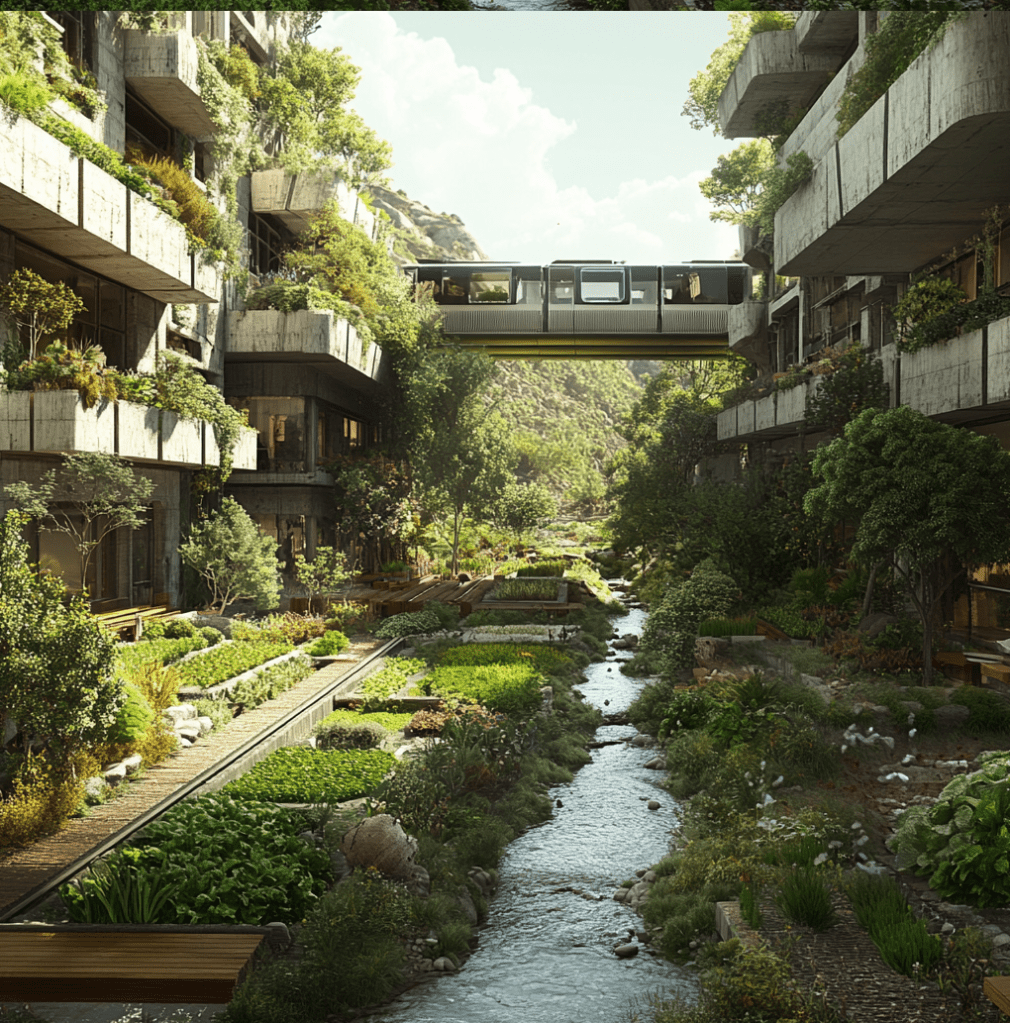
Sustainability and democracy vs. colonialism
by Bruce Shigeura
Solarpunk is a global vision of an environmentally sustainable global civilization composed of democratic communities. If any of us is trapped in poverty, exploited, powerless, and deprived of national rights, then none of us is free. Living a solarpunk lifestyle today in the advanced world is an exciting experiment that expands our knowledge, but it does not free the world’s poor. The solarpunk dream can only be fulfilled if we stand in solidarity with the struggles for independent economic development of the oppressed nations and cultures.
The countries of the global south are not to blame for low economic development and environmental problems. They are trapped paying interest on debts to the developed world, getting hunger wages producing low-value products like mineral ores and cash crops, while their environments are devastated and villages impoverished. Advanced nations intervene in their domestic policies, overthrow those governments that demand fair treatment, and corrupt officials. Poverty forces people to over-exploit their own land, over-grazing, farming, fishing, and gathering firewood, causing deforestation and desertification.
Before Columbus, the vast majority of peoples lived in self-sustaining, ecologically stable farm villages. Empires collected tribute and fought wars, but did not fundamentally alter the economies and cultures of the people they ruled.
Five centuries ago, European powers like Spain, England, and the Netherlands developed mercantile capitalism, economies dominated by banks and trading companies, with well-equipped armies and navies. When they explored and traded with the peoples of Asia, Africa, and the Americas, they brought devastating diseases like smallpox. They established European colonial governments, stole wealth in the form of precious metals and slaves. They transformed into peasants growing cotton, sugar cane, and tobacco on plantations.
While the countries of the global south became independent in the 19th and 20th centuries, the great powers continue to economically dominate them. In the past few decades, some countries of the global south have created viable internal economies and taken steps toward independence, such as the BRICS nations, Brazil, Russia, India, China, and South Africa.
Solarpunks in the First World should not judge the methods colonized peoples employ to achieve economic development and independence. Burkina Faso has a military government that is developing the country’s farming and gold refining. Brazil is planning a railroad through the Amazon rainforest from Atlantic to Pacific, to improve the whole continent economically. The Palestinians in Gaza are waging an armed struggle for nationhood. Condemning them is colonialist mentality. We must support their struggles, as environmental activist Greta Thunberg has with her participation in relief efforts for the people of Gaza. A solarpunk world will transfer technology and industry from the advanced countries, which have more than enough, to the developing world to establish global democracy and equality, and end global warming and the threat of world war.
 Bay Area Solarpunks